

The Community Design & Action Capstone Studio partnered with Tucson Hope Factory to design climate-responsive micro-shelter villages addressing housing insecurity in Tucson. Students developed site strategies, a modular shelter prototype, and a scalable framework grounded in trauma-informed, community-driven design.
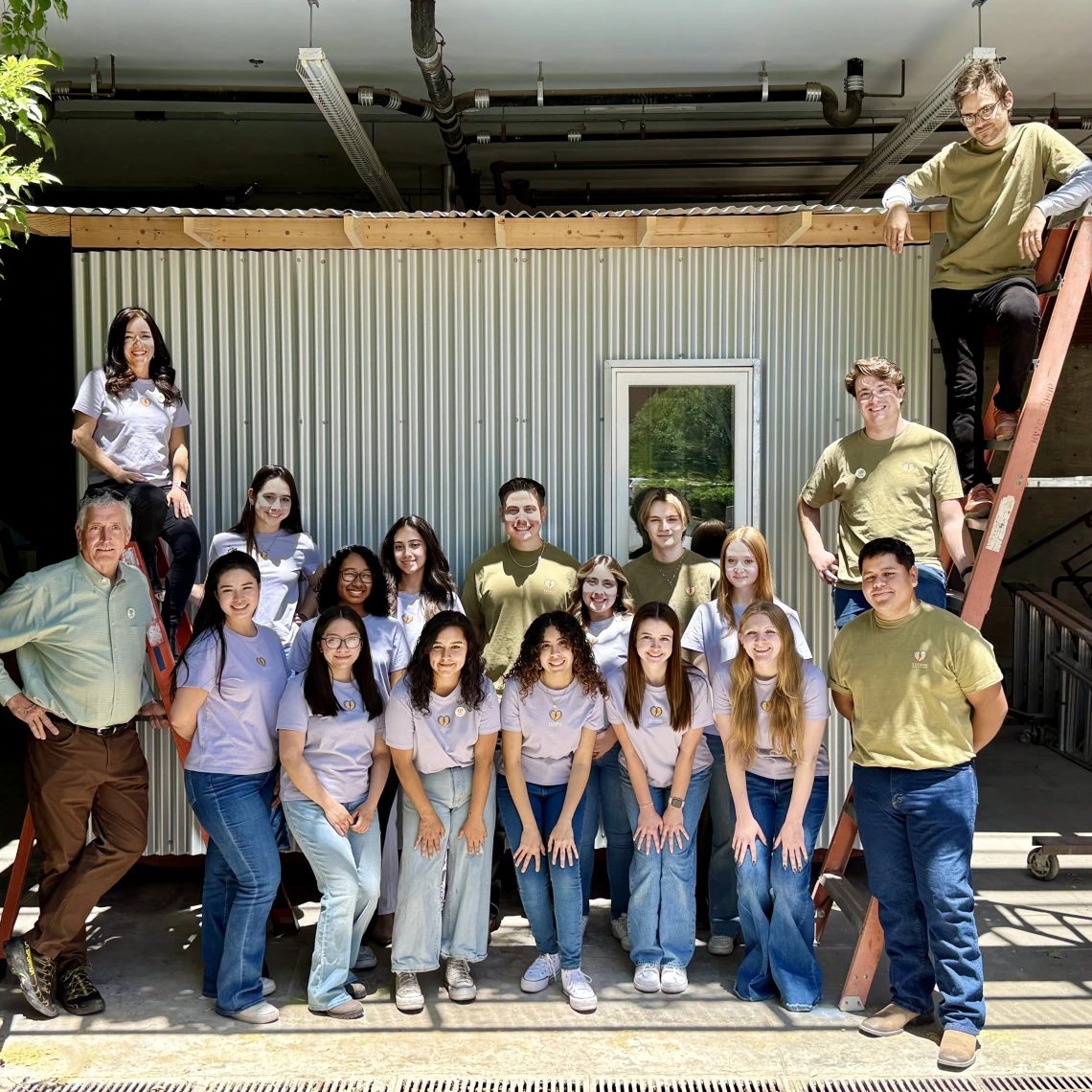
Project Team
- Courtney Crosson (PI)
- Teresa Rosano – Associate Professor of Practice, CAPLA School of Architecture
- Greg Veitch – Research Coordinator, Drachman Institute
- ARC498 Capstone Studio - Yasmina Dashti, Caro Durazo, Souhayla Farag, Ashlea Hume, Graciela Keymolent, Christian Mackay, Daniela Navarro, Olivia Nelson, Chloe O’Hail, Alberto Ramirez, Berenice Ramos Peña, Alondra Rodriguez, Mariana Rodriguez, Josh Russell, Jordan West, Connor Worley
Community Partners and Consultants
- Chuck Dunn – Executive Director, Tucson Hope Factory
- Tucson Hope Factory – Nonprofit partner supporting micro-shelter village development
- Sound Foundations NW – Tiny-home builders and advisors during Seattle research trip
- Habitat for Humanity CHUCK Center – Construction and design-build insight
- Local service providers, nonprofits, and faith-based partners – Provided community input and lived-experience perspectives
Project Details
Where: Tucson, Arizona
Outcomes:
- Built micro-shelter prototype
- Village design framework and planning toolkit
- Representative master plans for five viable sites
- Public exhibit and video documentation
- Volunteer-friendly construction and assembly manuals
Project Overview
The Community Design & Action Capstone Studio, led by Teresa Rosano and Greg Veitch, engaged 16 fifth-year architecture students from the University of Arizona's CAPLA School of Architecture in designing transitional micro-shelter villages, in collaboration with Tucson Hope Factory and the Drachman Institute. Rooted in trauma-informed and community-based design, the studio addressed housing insecurity through inclusive, service-learning pedagogy.
Project Description
Across two semesters, students investigated root causes of homelessness, conducted site analyses, and proposed scalable solutions for villages of 10–40 units. They evaluated over 50 Tucson sites, ultimately producing master plans for five viable locations and developing a replicable framework for future implementation. A modular micro-shelter prototype emphasized climate responsiveness, cost-efficiency, and ease of volunteer-led assembly. Centering lived experience, students engaged directly with unhoused individuals—including veterans and women—as well as nonprofits, service providers, and faith-based partners. A pivotal trip to Seattle included collaboration with Sound Foundations NW (which reports a 63% success rate transitioning residents to permanent housing) and hands-on construction of a tiny home. Students also drew insights from the University of Washington’s Design-Build Studio and Habitat for Humanity’s CHUCK Center. Throughout the process, students crafted detailed construction guides and prototyped a full-scale shelter to test environmental performance and feasibility. The design prioritizes privacy, safety, and community—balancing individual dignity with collective support. As one student reflected, “I really appreciated the community aspect of this project, having a real client and really feeling like there was a real project that is making a difference.” A community member echoed: “This is a beautiful project coming to life. I am very proud of the University for being part of this. I am thankful that many lives are being impacted!” Exemplifying the power of inclusive, community-driven design, the initiative has garnered media attention, secured grant funding, and positioned itself as a scalable model and catalyst for zoning reform in Tucson and beyond.
Project Impact
"This year's CAPLA team has created an innovative and effective solution to end homelessness. Their Capstone project has inspired us at the Tucson Hope Factory to continue to move forward in our quest to end homelessness in Tucson, in all of Arizona, and beyond". Chuck Dunn, Executive Director Tucson Hope Factory
Project Gallery
Click image to view larger size and begin slideshow:


